
Search Videos and More
 News
News
Novel Tricuspid and Mitral Valve Procedures Improve Patients' Quality of Life
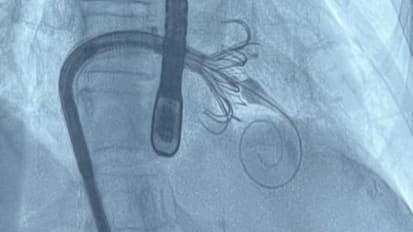
UC San Francisco interventional cardiologists and interventional echocardiographers recently performed two novel minimally invasive cardiac procedures for the first time in the health system. News
News
UCSF Health Joins Registry to Improve Cardiogenic Shock Treatment
UC San Francisco’s Heart and Vascular Center has been recognized by The American Heart Association (AHA) for its participation in a new Cardiogenic Shock Registry. News
News
Prenatal Enzyme Replacement Therapy for Lysosomal Storage Diseases
Pregnant patients with a diagnosed fetal lysosomal storage disease may have the opportunity to receive a promising treatment that could improve their babies’ health after birth. News
News
Breast Cancer Risk Calculator Can Assess Risk of Advanced Breast Cancer
Upcoming Conference to Focus on Breast Density and Prediction of Advanced and Interval Breast Cancer Risk News
News
UCSF and I-SPY 2 Breast Cancer Researchers Develop Newly Redefined Breast Cancer Response Subtypes
Research scientists and statisticians from UC San Francisco have developed improved biomarker classifications as part of their research results in the I-SPY 2 trial for high-risk breast cancer patients.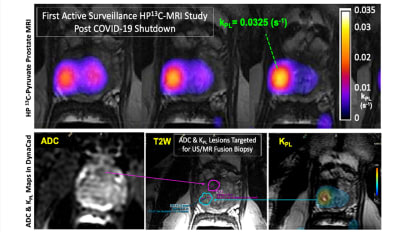 News
News
Novel Metabolic Imaging Method Detects Prostate Cancer Aggressiveness
UCSF investigators have shown that adding an emerging metabolic imaging technique to MR–transrectal ultrasound fusion prostate biopsies makes it possible to detect the extent and aggressiveness of prostate cancer more accurately than ever. Document
Cardiology Transfer Guide
Cardiology Transfer Guide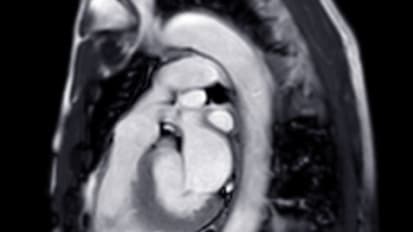 News
News
UCSF Researchers Develop Prediction Model of Aortic Aneurysm
Ascending thoracic aortic disease is an important cause of sudden death in the U.S., yet most aortic aneurysms are identified incidentally. News
News
UCSF Launches Initiative to Address Disparities in Pulse Oximetry Performance
This project seeks to improve accuracy for patients with darker skin pigmentation.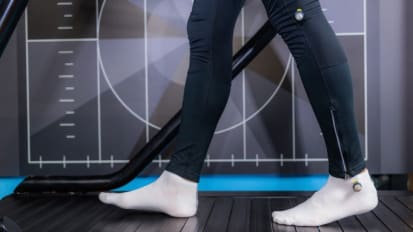 News
News
Artificial Intelligence and Wearable Sensors Put the Gait Lab in the Patient’s Pocket
UCSF orthopaedic surgeon Stefano Bini, MD, in collaboration with Google’s Advanced Technologies and Products (ATAP) division, is developing technology that will revolutionize how providers measure joint function and quantify joint disease. This groundbreaking approach uses cutting-edge machine-learning algorithms and data collected from inexpensive, wearable inertial sensors to accurately replicate gait lab outputs for a fraction of the cost of traditional methods, and in any context. News
News
UCSF Neurologist to Receive Prestigious Scientific Award
Stephen L. Hauser, MD, Professor of Neurology and Director of the UCSF Weill Institute for Neurosciences, has been chosen by the American Brain Foundation (ABF) to receive its second annual Scientific Breakthrough Award. Hauser is being honored for his career-long commitment to advancing the understanding of the genetic basis, immune mechanisms and treatment of multiple sclerosis (MS). News
News
Using AI in Electrocardiogram Analysis Can Improve Diagnosis and Treatment of Hypertrophic Cardiomyopathy
Hypertrophic cardiomyopathy (HCM) is a leading cause of sudden death in adolescents and initial detection is often difficult. A new UCSF study finds that Artificial Intelligence-enhanced (AI)-Electrocardiograms (ECG) may help identify the condition in its earliest stages and monitor important disease-related changes over time. News
News
Sorting Cancers by “Immune Archetypes” Represents Potential New Approach to Developing Precision Immunotherapies
Using data from over 300 patient tumors, UCSF researchers have described 12 classes of “immune archetypes” to classify cancer tumors. Their findings, published today in CELL, reveal that cancers from different parts of the body are immunologically similar to one another. These classifications provide unique strategies for enhancing each patient’s choice of cancer immunotherapies. News
News
UCSF-Led Study Confirms Some Cancer Immunotherapies May Lead to Myocarditis and Other Potentially Serious Arrhythmias
Immune checkpoint inhibitors (ICIs) have transformed cancer care by unleashing T-cells to fight tumors, but they can cause serious cardiotoxicities including myocarditis. News
News
Olfactory Loss from COVID-19 Infection: Cause and Treatments Studied at UCSF
Complete (anosmia) and incomplete (hyposmia) smell sensitivity impairment are widely reported indicators among the many symptoms of COVID-19 infection. Quality of life can be substantially impacted by the loss of taste and smell, with possible effects including depression, loss of appetite, and safety risks from lack of awareness of gas leaks, smoke or spoiled food. The path to recovery of taste and smell varies widely among affected individuals. Document
UCSF500 Cancer Gene Panel Test
The UCSF500 Cancer Gene Panel leverages world-class expertise for advanced cancer cases. Designed by our leading cancer specialists, the UCSF500 offers unparalleled depth and precision in genetic analysis. Document
Headache Center Inpatient Referral Guide
As the only program with an Inpatient Headache Treatment Unit in Northern California, UCSF’s Headache Center helps improve the quality of life for individuals suffering from debilitating headaches.
