
Search Videos and More
 News
News
Why Has Progress in the Treatment of Alzheimer’s Disease Taken 30 Years?
UCSF expert examines the past and future of clinical trials for Alzheimer’s Disease. News
News
Long-term Marijuana Smoking Can Impair Blood Vessel Function
It’s been known for many years that people who smoke tobacco have poor blood vessel function. Now, a team of researchers at UC San Francisco has shown for the first that people who smoke marijuana have the same problem. News
News
Tiny, Focused Shocks Help Many Patients Overcome Heart Arrhythmia
Pulsed field ablation uses a series of tiny electrical pulses to destroy the tissue causing the arrhythmia. The procedure takes an hour or less, compared to three or four hours for conventional treatment.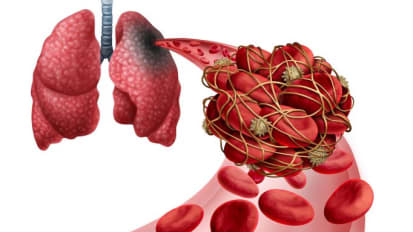 News
News
Improving Clinical Outcomes for Venous Thromboembolism
Venous thromboembolism (VTE) is serious condition that begins with a blood clot in a vein – often in the lower leg – that makes its way to the lungs, causing a pulmonary embolism with potentially fatal consequences.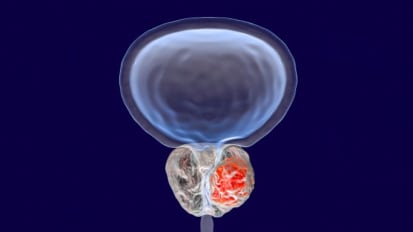 News
News
Radioligand Therapy Plus Pembrolizumab May Benefit Patients with Advanced Prostate Cancer
Immune checkpoint inhibitors have demonstrated limited efficacy in treating prostate cancer. Efforts to improve outcomes with combination therapies have mostly failed to demonstrate improvements compared to other types of cancer. News
News
Are New Therapies on the Horizon for Painful Skin Condition?
UCSF Health leads multi-center study of chronic inflammation of the skin that affects women and people of color disproportionately. News
News
What Matters Most to Patients Dealing With Stress Urinary Incontinence?
Many patients experience stress urinary incontinence (SUI) following surgical treatment for prostate cancer. To understand the impact of SUI on quality of life, a team of UCSF researchers interviewed and surveyed patients and published a series of studies. News
News
Nationally Recognized Health Equity Leader Appointed as Chair of UCSF Obstetrics and Gynecology Program
Andrea V. Jackson, MD, MAS, a highly regarded obstetrician, gynecologist and diversity champion, will draw on her experience in women’s reproductive health, training the next generation of caregivers and addressing systemic racism in her role as chair of UCSF Department of Obstetrics, Gynecology & Reproductive Sciences. News
News
Study Finds Significant Chemical Exposures in Women With Cancer
In a sign that exposure to certain endocrine-disrupting chemicals may be playing a role in cancers of the breast, ovary, skin and uterus, researchers have found that people who developed those cancers have significantly higher levels of these chemicals in their bodies. News
News
Could a Drug Prevent Hearing Loss from Loud Music and Aging?
UCSF scientists have achieved a breakthrough in understanding what is happening in the inner ear during hearing loss, laying the groundwork for preventing deafness. News
News
Inclusion of New Risk Factors Can Improve Prediction of Invasive Breast Cancer
UCSF researchers update Breast Cancer Surveillance Consortium model to account for BMI and other familial risk factors. News
News
Focused Ultrasound Technology May Overcome Barrier to Brain Tumor Treatments
The blood-brain barrier protects the brain from many viruses, bacteria, and other harmful small molecules that could be circulating throughout the body. However, this same barrier prevents many cancer therapies from reaching brain tumors. News
News
UCSF Cancer Researcher Thomas Martin Receives $4.6 million CIRM Grant
UC San Francisco’s Thomas G. Martin, MD, a leading expert in blood cancers, has received a grant of nearly $4.6 million from the California Institute of Regenerative Medicine (CIRM) to produce a CAR T cell therapy for multiple myeloma, the second most common malignancy among blood cancers.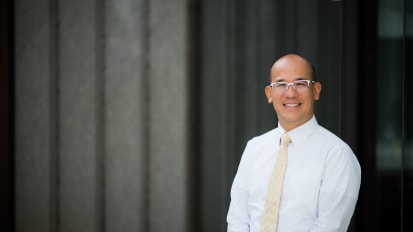 News
News
Prominent Orthopaedic Surgeon and Researcher to Lead UCSF Orthopaedics Program
C. Benjamin Ma, MD, a highly regarded orthopaedic surgeon and advanced imaging researcher, has been appointed as chair of the UCSF Department of Orthopaedic Surgery. Ma assumed his new role on January 1, 2024.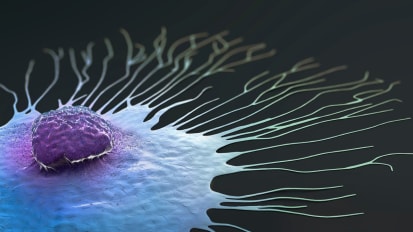 News
News
Improving Prediction of Advanced Breast Cancer Among Women of Different Races and Ethnicities
While regular screenings may decrease the chance of diagnosis of advanced breast cancer in some women and lead to a 20% reduction in breast cancer mortality, other women will be diagnosed with advanced breast cancer despite screening at regular intervals. News
News
UCSF Health’s Eric Small, MD, Elected ASCO President for 2025-2026 Term
The American Society of Clinical Oncology (ASCO) has elected Eric J. Small, MD, FASCO, to serve as its president for the term beginning in June 2025. News
News
Why Do Some Long Covid Patients Continue to Have Difficulty Exercising?
While some patients recover from the effects of SARS-CoV-2 infection, others have experienced the aftereffects of COVID-19 long after the initial infection. One of these long COVID symptoms is reduced exercise capacity. Document
Cancer Immunotherapy Toxicity Evaluation (CITE) Program
UCSF Health’s new Cancer Immunotherapy Toxicity Evaluation (CITE) Program is a valuable resource for both patient care and provider consults. News
News
Millions of Long-Term Smokers Have Lung Disease that Defies Diagnosis
Millions of Americans with tobacco-related lung disease have symptoms that do not fit any existing tobacco-related disease criteria – including the most common of those, chronic obstructive pulmonary disease (COPD)... News
News
UCSF Among First in U.S. to Receive New Surgery Designation from the American College of Surgeons
UC San Francisco Medical Center (UCSF) is among just four hospitals in the U.S. to be verified as part of the American College of Surgeons (ACS) Vascular Verification Program (Vascular-VP)... News
News
Aggressive Blood Pressure Control May Prevent Common Heart Condition
Heart conduction disorders can often lead to serious or fatal complications including complete heart block or heart failure. News
News
Can Artificial Intelligence Reduce Invasive Testing and Improve Cardiac Diagnostics?
Coronary heart disease is the leading cause of adult death worldwide. News
News
UCSF Surgical Oncologists Providing New Treatment Options for Patients with Metastatic Gastrointestinal Cancers
UCSF Health’s surgical oncology team is a Bay Area leader in an innovative chemotherapy infusion pump used to treat patients with widely metastatic colorectal and bile duct cancers that have spread to the liver and are no longer considered operable. Document
Interventional Cardiology Program
The UCSF Interventional Cardiology Program offers the latest minimally invasive catheter-based procedures to diagnose and treat the full spectrum of cardiovascular conditions.
