
Search Videos and More
Showing 1 - 13 of 13 results
 News
News
Should Older Men Reassess Their Long-term Prostate Medications?
One in three men will experience moderate-to-severe lower urinary tract symptoms in their lifetime, with symptoms including frequent urination, difficulty starting urination, nocturia and a weak urine stream News
News
UCSF Urology Experts Present Innovative Research and Treatment at National Urology Conference
Uncovering mechanisms of resistance to treatment in prostate cancer and improving response to cellular therapies in bladder cancer, are among the topics UCSF clinicians discussed at the American Urological Association’s 2026 Annual Meeting. News
News
UCSF Urology Clinicians Present Research Findings at SurgeWest
This year’s program featured innovative research and discussions by experts from the UCSF Department of Urology. News
News
How a Tumor Marker for Ovarian Cancer May Help Treat the Deadliest Bladder Cancers
Bladder tumors that have been excluded from clinical trials have a few things in common that could lead to new therapies. News
News
UCSF Prostate Cancer Program Awarded SPORE Grant by National Cancer Institute
The UCSF Prostate Cancer Program of the Helen Diller Family Comprehensive Cancer Center is the recipient of the National Cancer Institute’s (NCI) Specialized Programs of Research Excellence (SPORE) grant for prostate cancer. News
News
Prostate Cancer Study: More Health Benefits from Plant-Based Diet
Men with prostate cancer could significantly reduce the chances of the disease worsening by eating more fruits, vegetables, nuts and olive oil, according to new research by UC San Francisco. News
News
Prostate Cancer Surveillance, Treatment Disparities Among Urology Conference Talks
Prostate cancer treatment disparities and the timing of active surveillance are among the topics UCSF clinicians will discuss at AUA’s 2024 Annual Meeting in San Antonio, May 2 – May 6. News
News
Prostate Cancer Test Is Missing Early Disease in Transgender Women
Transgender women on hormone therapy tend to skew artificially low on prostate cancer screening tests, which may give false reassurance and delay diagnosis and treatment, reports a new study led by UC San Francisco. News
News
150 Milestone: Robotic Procedure Changes Prostate Cancer Care
UCSF Health has performed 150 robotic focal high-intensity focused ultrasound (HIFU) procedures for patients living with prostate cancer, becoming the first on the West Coast and the first UC Health System to reach that milestone. News
News
Adult Acquired Buried Penis: Improving Patient Outcomes
Adult-acquired buried penis (AABP) is a condition in which excess or abnormal surrounding soft tissue covers the penis, resulting in sexual and urinary dysfunction. While it’s associated with obesity, AABP does not typically subside with weight loss. News
News
What Matters Most to Patients Dealing With Stress Urinary Incontinence?
Many patients experience stress urinary incontinence (SUI) following surgical treatment for prostate cancer. To understand the impact of SUI on quality of life, a team of UCSF researchers interviewed and surveyed patients and published a series of studies. News
News
UCSF Health’s Eric Small, MD, Elected ASCO President for 2025-2026 Term
The American Society of Clinical Oncology (ASCO) has elected Eric J. Small, MD, FASCO, to serve as its president for the term beginning in June 2025.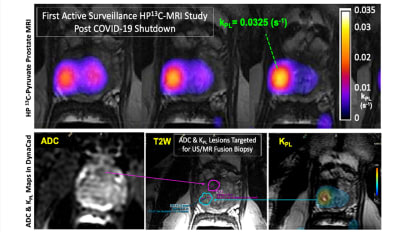 News
News
Novel Metabolic Imaging Method Detects Prostate Cancer Aggressiveness
UCSF investigators have shown that adding an emerging metabolic imaging technique to MR–transrectal ultrasound fusion prostate biopsies makes it possible to detect the extent and aggressiveness of prostate cancer more accurately than ever.
